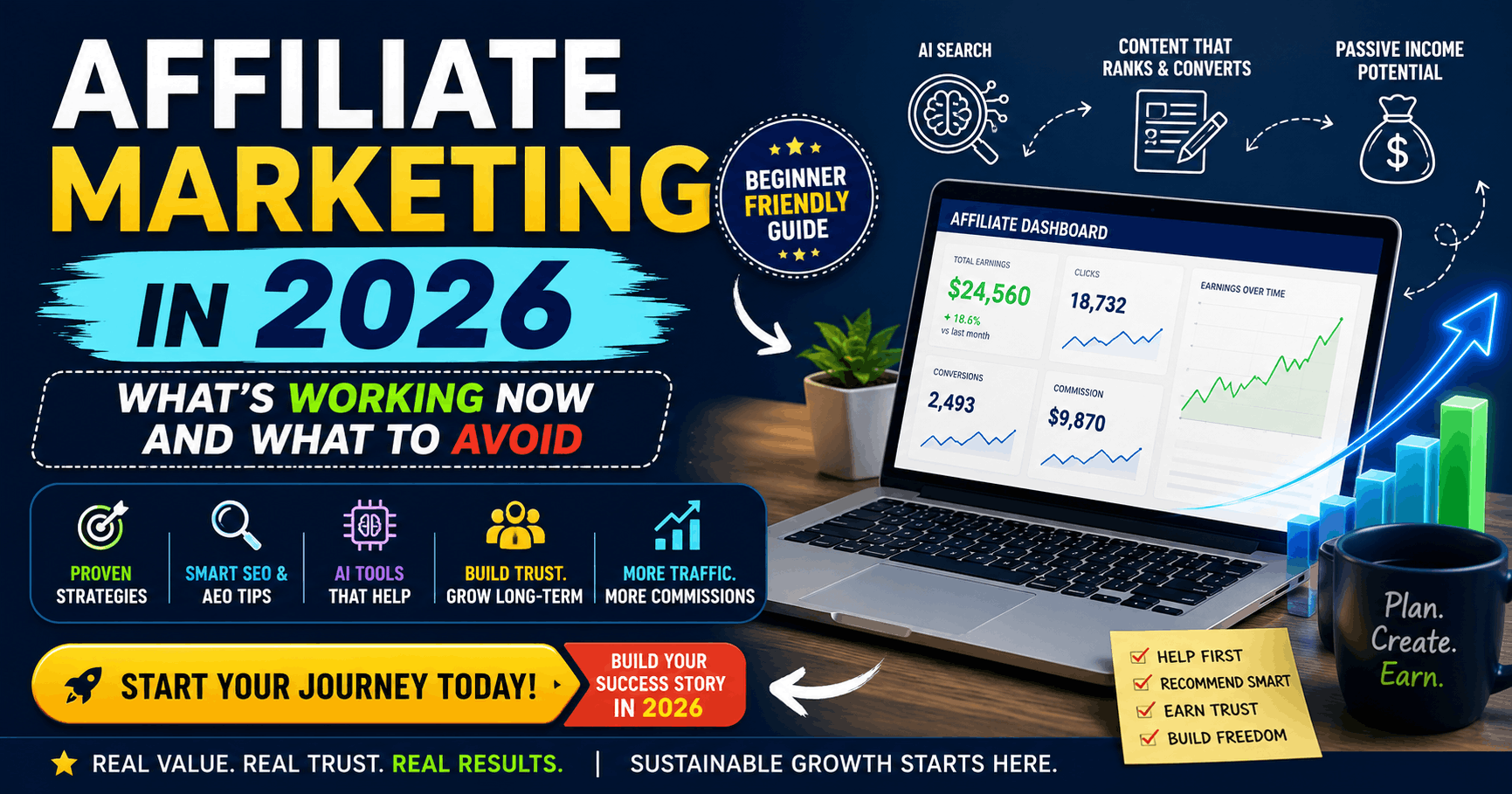
Affiliate marketing has never stood still, and Affiliate Marketing in 2026 is no exception. The strategies that generated consistent commissions just a few years ago are no longer guaranteed to deliver the same results. Search engines are becoming smarter, AI-powered search tools are changing how people discover information, and online audiences expect more authentic, helpful content than ever before. While these changes may seem overwhelming, they also create new opportunities for affiliates who are willing to adapt and focus on providing real value instead of chasing shortcuts.
The good news is that affiliate marketing remains one of the most accessible and rewarding ways to build an online income. However, success today isn’t about publishing dozens of low-quality articles or promoting every trending product that appears in your inbox. Instead, it’s about understanding your audience, solving their problems, recommending products you genuinely believe in, and building trust over time. Whether you’re just starting your affiliate journey or looking to improve your existing strategy, knowing what works in today’s competitive landscape can save you countless hours of frustration and help you make smarter decisions.
In this guide, you’ll discover the proven strategies that are helping affiliate marketers succeed in 2026, along with the outdated tactics that are no longer worth your time. We’ll explore what’s driving traffic, increasing conversions, and building long-term authority in an increasingly AI-driven digital world. By the end of this article, you’ll have a clear understanding of where to focus your efforts, what mistakes to avoid, and how to create a sustainable affiliate marketing business that continues to grow in the years ahead.
Start building your affiliate business the right way today! 👉 WATCH THIS VIDEO >>>
Why Affiliate Marketing Looks Different in 2026
The affiliate marketing industry has evolved rapidly over the past few years. While the core concept of earning commissions by recommending products remains the same, the way people search for information, consume content, and make purchasing decisions has changed dramatically. As a result, affiliate marketers must rethink their strategies to stay competitive in today’s digital landscape.
Several major shifts are shaping the future of affiliate marketing. Artificial intelligence is transforming search experiences, search engines are rewarding genuinely helpful content, and consumers are becoming more selective about who they trust online. Instead of relying on outdated tactics, successful affiliates are focusing on delivering value, building credibility, and creating content that answers real questions.
Understanding these changes is the first step toward building a sustainable affiliate business. Let’s explore the biggest factors influencing affiliate marketing in 2026.
The Rise of AI-Powered Search
One of the biggest changes affecting affiliate marketers is the rapid growth of AI-powered search. Today, many people no longer rely solely on traditional search engines to find answers. Instead, they use AI tools that provide direct, conversational responses, helping them research products, compare options, and solve problems much faster.
Platforms such as ChatGPT, Google AI Overviews, Microsoft Copilot, and Perplexity AI are changing how users discover content. Rather than clicking through multiple websites, users often receive summarized answers that highlight the most trustworthy and relevant information. This means affiliate marketers must create content that is not only optimized for search engines but also valuable enough to be referenced by AI-powered search experiences.
The focus has shifted from simply ranking for keywords to becoming a reliable source of information. Comprehensive guides, practical tutorials, real-world examples, and well-structured answers are far more likely to attract both search engine traffic and visibility within AI-generated responses. For affiliate marketers, adapting to this new search behavior is no longer optional—it’s becoming essential for long-term success.
Google’s Greater Focus on Helpful Content
Alongside the rise of AI-powered search, Google continues to refine its algorithms to prioritize content that genuinely helps readers. Instead of rewarding pages that are heavily optimized for search engines alone, Google increasingly favors content that demonstrates experience, expertise, authority, and trustworthiness (E-E-A-T). This means affiliate marketers need to create content that answers real questions, provides practical guidance, and delivers value beyond simply promoting products.
In the past, publishing large volumes of keyword-focused articles could sometimes produce decent rankings. Today, that approach is far less effective. Thin content, excessive keyword stuffing, and generic AI-generated articles without original insights are less likely to perform well. Readers—and search engines—expect content that is accurate, informative, and backed by genuine knowledge or experience.
Helpful content also goes beyond simply explaining what a product does. It should address common challenges, compare available options, discuss both the advantages and limitations of a product, and help readers make informed decisions. Including step-by-step instructions, practical tips, screenshots, examples, or personal observations can significantly improve the usefulness of your content while increasing reader confidence.
For affiliate marketers, the goal should always be to educate first and promote second. When readers consistently find valuable answers on your website, they are more likely to trust your recommendations, return for future content, and take action through your affiliate links. In 2026, creating people-first content isn’t just a best practice—it’s one of the strongest foundations for long-term affiliate marketing success.
Why Trust Matters More Than Ever
In 2026, trust has become one of the most valuable assets an affiliate marketer can build. With thousands of websites promoting similar products and AI making it easier than ever to create content, readers are becoming more selective about whose advice they follow. They don’t just want product recommendations—they want honest guidance from someone who understands their needs and has their best interests in mind.
Building trust starts with being transparent and authentic. Instead of claiming that every product is the “best,” explain who it’s suitable for, where it excels, and any potential drawbacks readers should consider. Balanced reviews and realistic expectations help your audience make informed decisions, which ultimately strengthens your credibility. Readers appreciate honesty, and they’re far more likely to return to a website that prioritizes helpful advice over aggressive sales tactics.
Consistency also plays a key role in earning trust. Publishing accurate, up-to-date content, recommending quality products, and responding to your audience’s questions all contribute to a positive reputation. Over time, this consistency establishes your website as a reliable resource rather than just another affiliate site focused on earning commissions.
Ultimately, successful affiliate marketing isn’t about convincing people to click a link—it’s about helping them solve a problem or make a better decision. When your content genuinely educates and supports your readers, affiliate sales become a natural outcome of the trust you’ve built. In the long run, credibility will always outperform shortcuts, making trust one of the most important factors for sustainable affiliate marketing success in 2026.
What’s Working in Affiliate Marketing in 2026
Although affiliate marketing has become more competitive, the opportunities for success have never been greater. The difference is that today’s successful affiliates focus on creating genuine value instead of relying on shortcuts or outdated tactics. Rather than trying to manipulate search engines or overwhelm readers with promotional content, they prioritize building trust, solving problems, and delivering useful information that helps people make confident decisions.
The strategies that perform well in 2026 aren’t necessarily the newest ones—they’re the ones that consistently put the audience first. By combining quality content with smart SEO practices, multiple traffic sources, and ethical product recommendations, affiliate marketers can build a sustainable business that continues to grow over time. Let’s explore the approaches that are producing the best results today.
Creating Helpful, Experience-Based Content
High-quality content remains the foundation of every successful affiliate marketing business. However, simply publishing articles filled with generic information is no longer enough. Readers are looking for practical advice, clear explanations, and real insights that help them solve a problem or choose the right product.
Instead of writing content that only describes product features, focus on explaining how those features benefit the user. Step-by-step tutorials, beginner guides, product comparisons, case studies, and answers to frequently asked questions provide far more value than promotional content alone. Whenever possible, include personal observations, screenshots, examples, or practical tips that readers won’t easily find elsewhere.
Content created with the reader’s needs in mind not only builds trust but also encourages visitors to spend more time on your website, share your articles, and return for future advice. These positive engagement signals can contribute to stronger search visibility while increasing the likelihood of affiliate conversions.
Targeting Long-Tail Keywords
Keyword research continues to play an important role in affiliate marketing, but the focus has shifted toward long-tail keywords that match specific user intent. Instead of competing for broad, highly competitive search terms, successful affiliates target detailed phrases that reflect the exact questions or problems their audience is trying to solve.
For example, a search like “best affiliate marketing platform for beginners” reveals much clearer intent than simply searching for “affiliate marketing.” People using long-tail keywords are often further along in their decision-making process, making them more likely to engage with your content and take action.
Long-tail keywords also provide opportunities to rank more easily, especially for newer websites. By creating comprehensive content that answers specific questions, you can attract highly targeted visitors while establishing your website as a valuable resource within your niche.
Building Multiple Traffic Sources
Relying on a single traffic source has become increasingly risky. Search engine algorithms change regularly, social media platforms evolve, and audience behavior continues to shift. That’s why successful affiliate marketers are building their businesses around multiple channels instead of depending entirely on one platform.
Start building your affiliate business the right way today! 👉 WATCH THIS VIDEO >>>
Organic search remains an important source of traffic, but combining it with YouTube, Pinterest, LinkedIn, email marketing, online communities, and other relevant platforms creates a more stable and resilient business. Each channel reaches users at different stages of their buying journey and helps expand your overall online presence.
Diversifying your traffic sources also reduces the impact of unexpected algorithm updates or platform changes. If one source experiences a temporary decline, the others can continue driving visitors and helping your business maintain consistent growth.
Promoting High-Quality Products That Solve Real Problems
Not every affiliate product deserves your recommendation. In 2026, readers are becoming more selective, and promoting low-quality or irrelevant products can quickly damage your credibility. Successful affiliate marketers focus on products that genuinely solve problems, provide value, and align with their audience’s needs.
Before recommending a product, consider its reputation, customer feedback, support quality, and overall usefulness. Whenever possible, recommend products you’ve researched thoroughly or have firsthand experience using. Honest reviews that discuss both strengths and limitations help readers make informed decisions while demonstrating your transparency.
Quality recommendations create satisfied customers, encourage repeat visitors, and strengthen your reputation over time. Although promoting trustworthy products may require more research, the long-term benefits far outweigh the short-term gains of chasing quick commissions.
Using AI as a Productivity Assistant, Not a Content Replacement
Artificial intelligence has become an invaluable tool for affiliate marketers, but the most successful creators use it to improve their workflow rather than replace their expertise. AI can help generate ideas, organize outlines, summarize research, improve grammar, and streamline repetitive tasks, allowing you to create content more efficiently.
However, AI-generated content should always be reviewed, refined, and enhanced with human knowledge before publishing. Readers appreciate unique perspectives, practical examples, and thoughtful recommendations that reflect genuine understanding. These are qualities that build trust and help your content stand out in a crowded marketplace.
Think of AI as a productivity partner instead of an autopilot. When combined with your own experience, research, and editorial judgment, it can help you produce higher-quality content while saving valuable time. This balanced approach allows you to remain authentic while taking advantage of the latest technology to grow your affiliate marketing business.
What to Avoid in Affiliate Marketing in 2026
Knowing what works is only one part of building a successful affiliate business. Equally important is understanding which strategies have become ineffective or even harmful. As affiliate marketing continues to evolve, many techniques that once delivered quick results are now more likely to reduce trust, limit visibility, and slow your long-term growth.
Rather than looking for shortcuts, successful affiliate marketers focus on creating a sustainable business built on credibility and value. Avoiding the following common mistakes can help you stay ahead of the competition while protecting both your reputation and your search rankings.
Publishing Thin AI-Generated Content
Artificial intelligence has transformed content creation, but relying entirely on AI-generated articles is a mistake many beginners still make. Publishing content without reviewing, editing, or adding original insights often results in articles that feel generic, repetitive, and lacking in real value. Readers can quickly recognize when content doesn’t answer their questions in a meaningful way.
Search engines are also becoming better at identifying content that provides little practical benefit. Articles that simply repeat information already available elsewhere are less likely to earn strong rankings or attract loyal readers. Instead of using AI to replace your expertise, use it to support your writing process by generating ideas, organizing information, or improving clarity.
Always add your own perspective, practical tips, examples, or research before publishing. This not only improves the quality of your content but also helps establish your website as a trusted resource that stands out from countless AI-generated pages.
Chasing Every Trending Product
It can be tempting to promote every new product that promises high commissions, especially when launch emails and marketing campaigns create excitement. However, constantly switching between unrelated products often confuses your audience and weakens your authority within your chosen niche.
Readers are more likely to trust recommendations from someone who consistently focuses on a specific topic rather than someone promoting anything that appears profitable. Staying within your niche allows you to build expertise, understand your audience’s needs, and create content that naturally supports your affiliate recommendations.
Before promoting any product, ask yourself whether it genuinely solves a problem for your readers and aligns with your website’s purpose. Choosing relevance over quick commissions helps you build stronger relationships with your audience while creating a more sustainable affiliate business.
Depending Only on Google Traffic
Organic search traffic can be incredibly valuable, but relying on Google as your only source of visitors can be risky. Search algorithms change regularly, and even well-established websites can experience fluctuations in rankings. If all of your traffic depends on a single platform, a sudden update can significantly affect your business.
A more reliable approach is to build multiple traffic channels that work together. Creating helpful YouTube videos, sharing content on Pinterest or LinkedIn, building an email list, and participating in relevant online communities can all help diversify your audience.
When your traffic comes from several sources, you’re less vulnerable to unexpected changes on any one platform. More importantly, you’ll reach people wherever they prefer to consume content, increasing both your visibility and your long-term growth potential.
Prioritizing Sales Over Helping Readers
One of the quickest ways to lose your audience’s trust is by making every piece of content feel like a sales pitch. Filling articles with excessive affiliate links, exaggerated claims, or constant calls to buy can discourage readers from engaging with your content. Most visitors are looking for guidance first, not a hard sell.
Instead, focus on educating your audience and helping them make informed decisions. Explain how a product works, discuss its strengths and limitations, compare it with alternatives, and recommend it only when it genuinely fits the reader’s needs. This balanced approach creates a better user experience while making your recommendations more believable.
Ironically, when readers trust your advice, they are often more willing to click your affiliate links because they feel confident that your recommendations are based on value rather than commissions. Helping people should always come before selling to them.
Ignoring Content Updates and Website Maintenance
Publishing an article is only the beginning. As affiliate marketing continues to evolve, products change, links expire, prices are updated, and new competitors enter the market. Leaving your content untouched for months or years can reduce its usefulness and gradually affect both rankings and conversions.
Make it a habit to review your existing content regularly. Update outdated information, replace broken affiliate links, refresh screenshots, improve recommendations, and add new insights whenever necessary. Even small improvements can significantly increase the accuracy and relevance of your articles.
Keeping your content current also sends positive signals to both readers and search engines. A well-maintained website demonstrates that you care about providing reliable information, helping you build long-term authority while ensuring your affiliate content continues to perform effectively in 2026 and beyond.
How Beginners Can Succeed with Affiliate Marketing in 2026
Starting an affiliate marketing business has never been easier, but building one that generates consistent income still requires patience, strategy, and a willingness to learn. While it’s easy to get distracted by promises of overnight success, the most successful beginners focus on creating a solid foundation rather than chasing shortcuts. Small, consistent improvements often lead to bigger results over time.
The good news is that you don’t need a large budget, advanced technical skills, or years of experience to get started. By concentrating on a few proven principles, you can avoid common beginner mistakes and steadily build an affiliate business that grows with your knowledge and effort. Here are five practical strategies that can help you succeed in 2026.
Choose One Profitable Niche
One of the biggest mistakes beginners make is trying to promote products across too many unrelated topics. While this may seem like a way to reach a larger audience, it often makes it difficult to establish authority or build trust. People are more likely to follow recommendations from someone who consistently shares valuable information within a specific niche.
Choose a niche that balances your interests with market demand. Look for topics where people actively search for solutions and where quality affiliate products are available. A focused niche also makes keyword research, content planning, and audience engagement much easier.
As your website grows, you’ll become more knowledgeable about your niche and better equipped to create helpful content that genuinely serves your readers. This expertise can gradually position you as a trusted resource, making your affiliate recommendations more effective.
Create Consistent, High-Quality Content
Consistency is one of the most important factors in affiliate marketing success. Publishing valuable content on a regular schedule helps search engines recognize your website as active while giving readers more reasons to visit and return. Instead of aiming for perfection, focus on creating useful content that answers real questions and solves common problems.
Develop a content plan that includes beginner guides, product reviews, tutorials, comparison articles, and frequently asked questions related to your niche. Each piece of content should have a clear purpose and provide practical information that readers can apply immediately.
Over time, a growing library of high-quality articles creates multiple opportunities for organic traffic and affiliate conversions. The more helpful content you publish, the more authority your website can build within your chosen niche.
Focus on Solving Problems Before Selling Products
Successful affiliate marketers understand that readers visit their websites looking for answers, not advertisements. Before recommending any product, identify the specific challenge your audience is facing and provide practical guidance that helps them understand the available solutions.
When a product naturally fits the solution, explain how it can help and why you recommend it. Support your recommendation with useful details, comparisons, benefits, and any limitations readers should consider. This educational approach allows readers to make informed decisions rather than feeling pressured to buy.
By consistently solving problems first, you build stronger relationships with your audience. As trust grows, readers become more confident in your recommendations, making affiliate sales a natural result of the value you provide.
Build Trust Before Expecting Sales
Affiliate commissions are earned through trust, not persuasion. Visitors rarely purchase from someone they have just discovered unless they believe the information is reliable and unbiased. That’s why building credibility should always take priority over maximizing clicks.
Be transparent about your affiliate relationships, recommend products that genuinely benefit your audience, and avoid making unrealistic income claims or exaggerated promises. Honest communication creates confidence and encourages readers to return whenever they need advice or recommendations.
Start building your affiliate business the right way today! 👉 WATCH THIS VIDEO >>>
Trust also develops through consistency. Publishing accurate, well-researched content, updating older articles, and maintaining a professional website all contribute to a positive reputation. Over time, this credibility becomes one of your strongest competitive advantages.
Track Your Results and Keep Improving
Affiliate marketing is an ongoing learning process, and even experienced marketers regularly analyze what’s working and what needs improvement. Instead of guessing which strategies are effective, use data to guide your decisions and refine your content over time.
Monitor key metrics such as organic traffic, keyword rankings, click-through rates, affiliate link performance, and conversion rates. These insights can help you identify your most successful content as well as areas that need additional optimization or updates.
Don’t be discouraged if results take time. Every article you publish, every improvement you make, and every lesson you learn contributes to your long-term growth. By consistently reviewing your performance and making small adjustments, you’ll continue building a stronger affiliate marketing business that is well-positioned for success in 2026 and beyond.
Future Trends Shaping Affiliate Marketing Beyond 2026
Affiliate marketing continues to evolve alongside advances in technology and changing consumer expectations. While no one can predict the future with complete certainty, several emerging trends are already influencing how people discover content, evaluate products, and make purchasing decisions. Staying informed about these developments can help affiliate marketers adapt early instead of reacting after the market has already changed.
The most successful affiliates don’t chase every new trend. Instead, they focus on understanding long-term shifts and gradually incorporating them into their marketing strategy. By preparing for these changes today, you’ll be better positioned to grow your affiliate business in the years ahead.
AI Search Will Continue to Influence Content Discovery
Artificial intelligence is expected to play an even greater role in how users search for information. AI-powered search assistants are becoming more capable of answering complex questions, summarizing content, and recommending trustworthy sources. As more people rely on these tools, affiliate marketers will need to create content that is clear, well-structured, and genuinely helpful.
Rather than writing solely for search engines, focus on answering specific questions your audience is asking. Comprehensive guides, practical tutorials, and detailed comparisons are more likely to be referenced by AI-driven search experiences. Organizing your content with descriptive headings, concise explanations, and frequently asked questions can also improve its visibility.
As AI search continues to evolve, content that demonstrates expertise and solves real problems will have a stronger chance of reaching new audiences, regardless of how search technology changes.
Video Content Will Continue to Grow
Video has become one of the most effective ways to educate audiences and build trust. Whether it’s product demonstrations, tutorials, reviews, or quick educational clips, many people now prefer watching content before making a purchasing decision. This trend is expected to continue well beyond 2026.
You don’t need expensive equipment or a large production team to benefit from video marketing. Screen recordings, presentation-style videos, and simple product walkthroughs can provide tremendous value when they focus on helping viewers solve a problem.
Combining written articles with relevant videos also creates a stronger content ecosystem. Your blog can attract organic search traffic while your videos reach audiences on platforms like YouTube and social media, giving people multiple ways to engage with your content.
Personal Branding Will Become More Important
As online competition continues to increase, people are paying closer attention to who is providing the information they consume. A recognizable personal or brand identity helps differentiate your website from countless others covering similar topics.
You don’t have to become a public influencer to build a strong brand. Consistently publishing valuable content, maintaining a professional website, using a recognizable visual identity, and communicating with honesty can all strengthen your reputation over time.
When readers recognize your brand as a reliable source of information, they are more likely to return for future advice, subscribe to your updates, and trust your affiliate recommendations. Strong branding creates long-term loyalty that is difficult for competitors to replicate.
Community-Based Marketing Will Keep Expanding
Affiliate marketing is gradually becoming more relationship-driven than ever before. Instead of relying only on one-way communication through blog posts, successful marketers are building communities where people can ask questions, share experiences, and learn together.
Platforms such as Facebook Groups, LinkedIn communities, Discord servers, Reddit, and niche forums provide opportunities to engage directly with your audience. By participating in meaningful conversations and offering helpful advice, you can establish credibility without constantly promoting products.
Communities also provide valuable feedback about the challenges your audience faces. These insights can inspire new content ideas while helping you create resources that better address your readers’ needs.
Building an Email List Will Remain a Long-Term Asset
While search engines and social media platforms continue to evolve, one marketing asset remains firmly under your control—your email list. Unlike third-party platforms, an email list allows you to communicate directly with your audience whenever you publish new content, recommend useful products, or share important updates.
Encourage visitors to subscribe by offering valuable resources such as beginner guides, checklists, templates, or newsletters that solve specific problems. Once someone joins your list, focus on providing consistent value instead of sending constant promotional emails.
An engaged email audience can generate repeat traffic, strengthen relationships, and improve affiliate conversions over time. As digital marketing continues to change, building an email list remains one of the smartest long-term investments an affiliate marketer can make.
Looking beyond 2026, the fundamentals of affiliate marketing are unlikely to change. People will always search for reliable information before making purchasing decisions. Affiliate marketers who prioritize helpful content, embrace new technologies thoughtfully, and build lasting relationships with their audience will be well-positioned for continued success, regardless of how the industry evolves.
Conclusion
Affiliate Marketing in 2026 continues to offer incredible opportunities for beginners and experienced marketers alike, but the path to success has changed. The days of relying on shortcuts, thin content, and aggressive promotions are gradually fading. Instead, sustainable growth comes from creating valuable content, understanding your audience’s needs, building trust, and adapting to new technologies without losing the human touch.
As you’ve seen throughout this guide, the strategies that are working today focus on quality over quantity. Publishing helpful, experience-driven content, targeting the right keywords, diversifying your traffic sources, recommending products that genuinely solve problems, and using AI responsibly can help you build a strong foundation for long-term success. At the same time, avoiding outdated tactics such as overusing AI-generated content, chasing every trending product, or relying entirely on a single traffic source can protect your business from unnecessary setbacks.
Start building your affiliate business the right way today! 👉 WATCH THIS VIDEO >>>
Remember, affiliate marketing is not a race to earn your first commission—it’s a business built on credibility, consistency, and continuous improvement. Every helpful article you publish, every reader you assist, and every lesson you learn contributes to your long-term growth. Stay focused on providing genuine value, keep refining your strategy as the industry evolves, and don’t be afraid to adapt when new opportunities arise.
If you’re just getting started, begin with one niche, create one high-quality article at a time, and focus on helping your audience before expecting results. Small, consistent actions often lead to the biggest achievements over time. By applying the strategies covered in this guide, you’ll be well-equipped to navigate Affiliate Marketing in 2026 with confidence and build a business that continues to grow for years to come.
Frequently Asked Questions (FAQs)
1. Is affiliate marketing still worth it in 2026?
Yes, affiliate marketing remains one of the most effective ways to earn income online in 2026. Although the industry has become more competitive, there are still plenty of opportunities for those who create helpful content, build trust with their audience, and promote products that genuinely solve problems. Success now depends more on providing value than using outdated marketing shortcuts.
2. What is the best affiliate marketing strategy in 2026?
The most effective strategy is to focus on creating high-quality, experience-based content that answers your audience’s questions. Combine this with long-tail keyword targeting, multiple traffic sources, ethical product recommendations, and consistent content updates. Building trust with your audience is the key to long-term affiliate marketing success.
3. Can beginners start affiliate marketing with no experience?
Absolutely. Beginners can start affiliate marketing without prior experience by choosing a specific niche, learning basic SEO, creating valuable content, and promoting trustworthy affiliate products. With consistency and a willingness to learn, it’s possible to build a successful affiliate business over time.
4. Is AI replacing affiliate marketers?
No. AI is changing how affiliate marketers work, but it isn’t replacing them. AI can help with research, brainstorming, outlining, and editing, but readers still value authentic experiences, practical advice, and trustworthy recommendations. The most successful affiliate marketers use AI as a productivity tool while adding their own expertise and insights.
5. How long does it take to make money with affiliate marketing?
The timeline varies depending on your niche, content quality, traffic strategy, and consistency. Some affiliates earn their first commission within a few months, while others take longer. Building a sustainable affiliate business requires patience, regular content creation, and ongoing optimization rather than expecting overnight success.
6. Should I focus only on Google traffic?
No. While Google can generate valuable organic traffic, relying on a single source is risky. A stronger approach is to combine SEO with platforms like YouTube, Pinterest, LinkedIn, email marketing, and other relevant channels. Diversifying your traffic sources creates a more stable and resilient affiliate business.
7. What are the biggest affiliate marketing mistakes to avoid in 2026?
Some of the most common mistakes include publishing low-quality AI-generated content without human editing, promoting too many unrelated products, depending entirely on Google traffic, prioritizing sales over helping readers, and failing to update existing content. Avoiding these mistakes can improve both your credibility and long-term results.
8. Which affiliate marketing niches are expected to perform well in 2026?
Evergreen niches such as personal finance, AI software, digital marketing, productivity tools, web hosting, health and wellness, online education, and cybersecurity continue to show strong growth potential. The best niche is one that combines consistent audience demand with high-quality affiliate products and aligns with your interests or expertise.
9. How important is SEO for affiliate marketing in 2026?
SEO remains one of the most important traffic sources for affiliate marketers. However, modern SEO focuses on search intent, helpful content, E-E-A-T, semantic optimization, and answering users’ questions comprehensively. Combining SEO with Answer Engine Optimization (AEO) can improve visibility in both traditional search engines and AI-powered search platforms.
10. What is the secret to long-term success in affiliate marketing?
There is no single secret, but long-term success comes from consistently helping your audience, publishing valuable content, recommending trustworthy products, adapting to industry changes, and continuously improving your website. Affiliate marketers who prioritize relationships over quick commissions are more likely to build a sustainable and profitable online business.
I really appreciate you for your valuable time to read this article and I hope you found it helpful to start your Affiliate journey. Affiliate marketing continues to evolve, and success comes from staying informed and adapting to change. This guide is designed to help beginners understand what’s working in 2026, avoid common pitfalls, and build a sustainable affiliate business with confidence.
“The future of affiliate marketing belongs to those who build trust—not those who chase shortcuts.”